Hansi Jio BP — Fail-Safe Hybrid Solar System

A benchmark 12kWp solar + 20kWh battery installation delivering 99.9% uptime and 90% diesel reduction at a 24×7 petrol pump in Haryana.

12 kWp

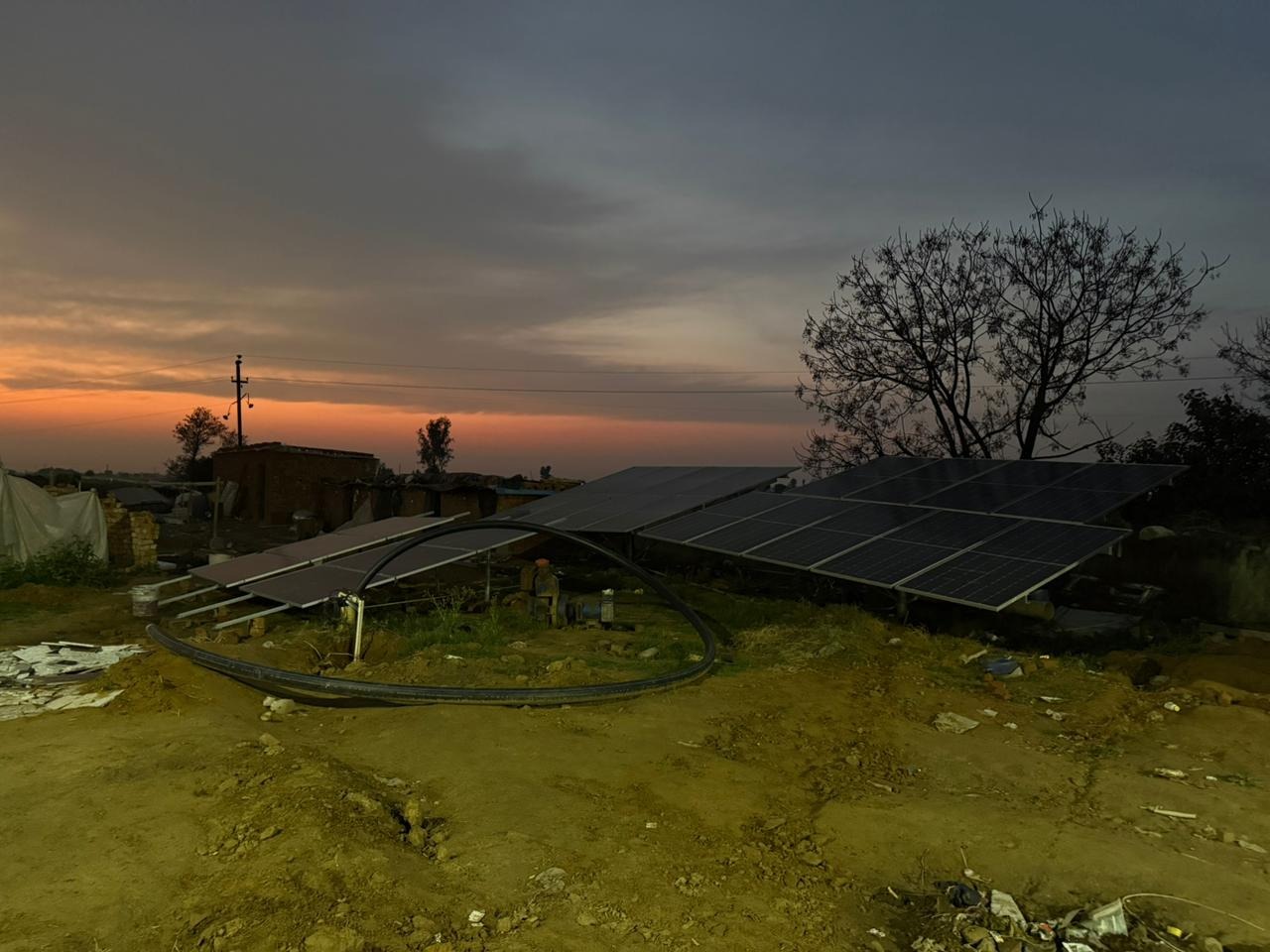
Solar PV Array (23 Panels)

20 kWh

Lithium-ion Battery with BMS

12 kW

3-Phase Hybrid Inverter

99.9%

System Uptime Achieved

Project Overview

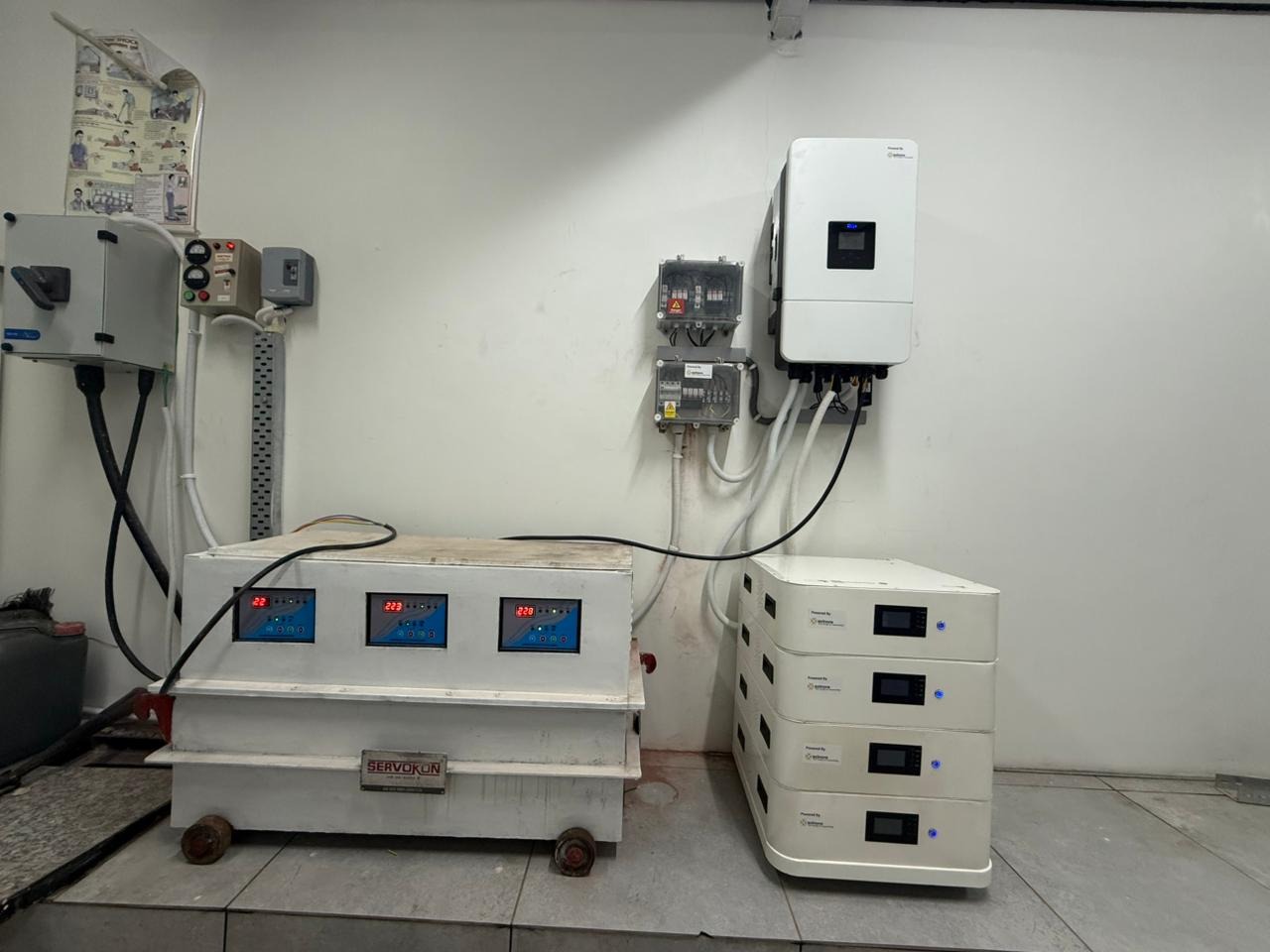
Ezinore designed and implemented a customized fail-safe hybrid solar energy system at the Hansi Jio BP petrol pump, addressing the critical challenge of maintaining 24×7 uninterrupted operations in an area with unreliable grid infrastructure.

Location: Hansi, Haryana, India
Client: Jio BP Petrol Pump
Segment: Commercial / Fuel Retail
Commissioned: February 2026

The system’s unique dual-path architecture ensures that even in the event of component failure, the petrol pump continues operations without interruption — essential for Jio BP’s brand commitment to reliability.
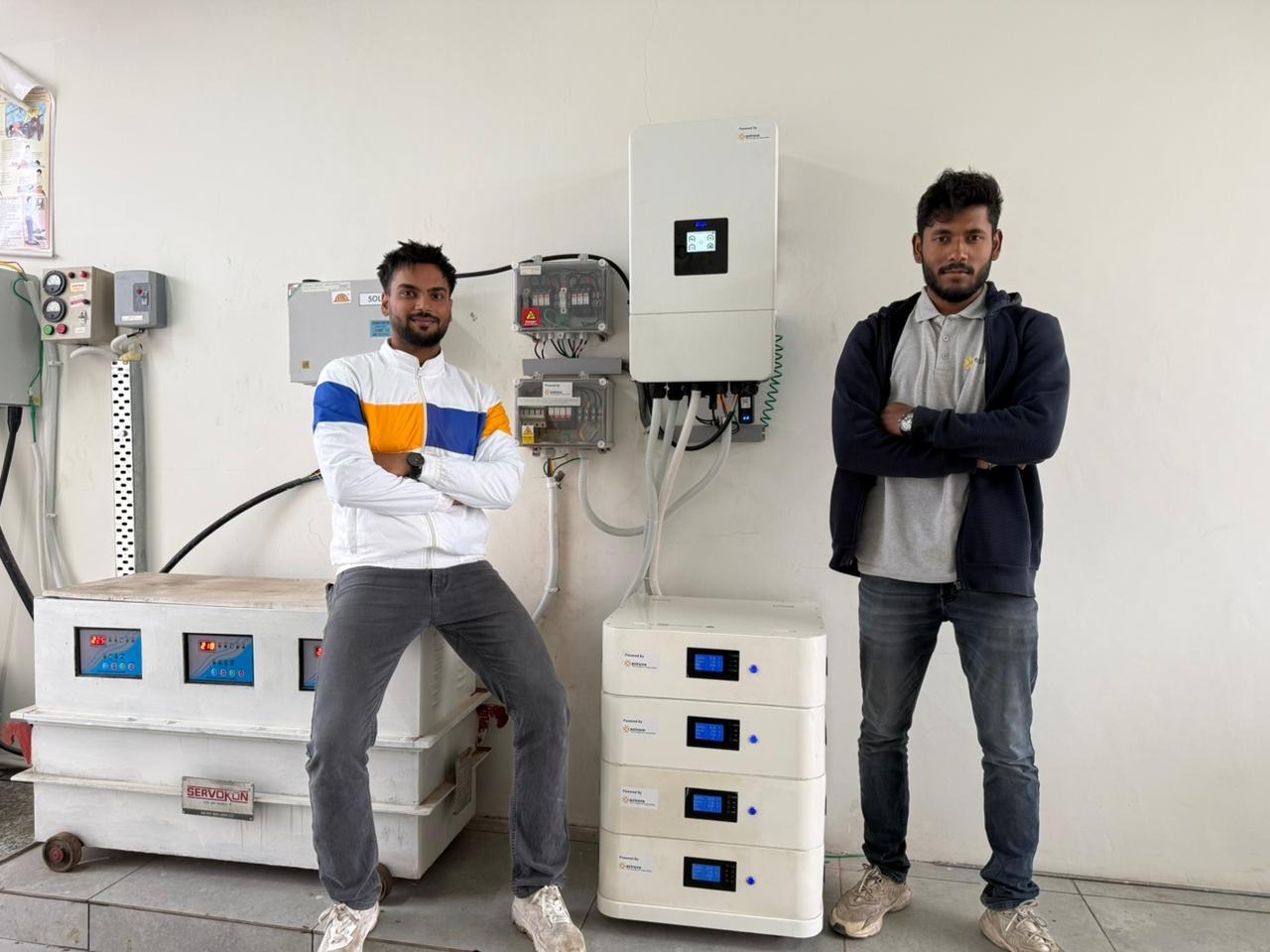
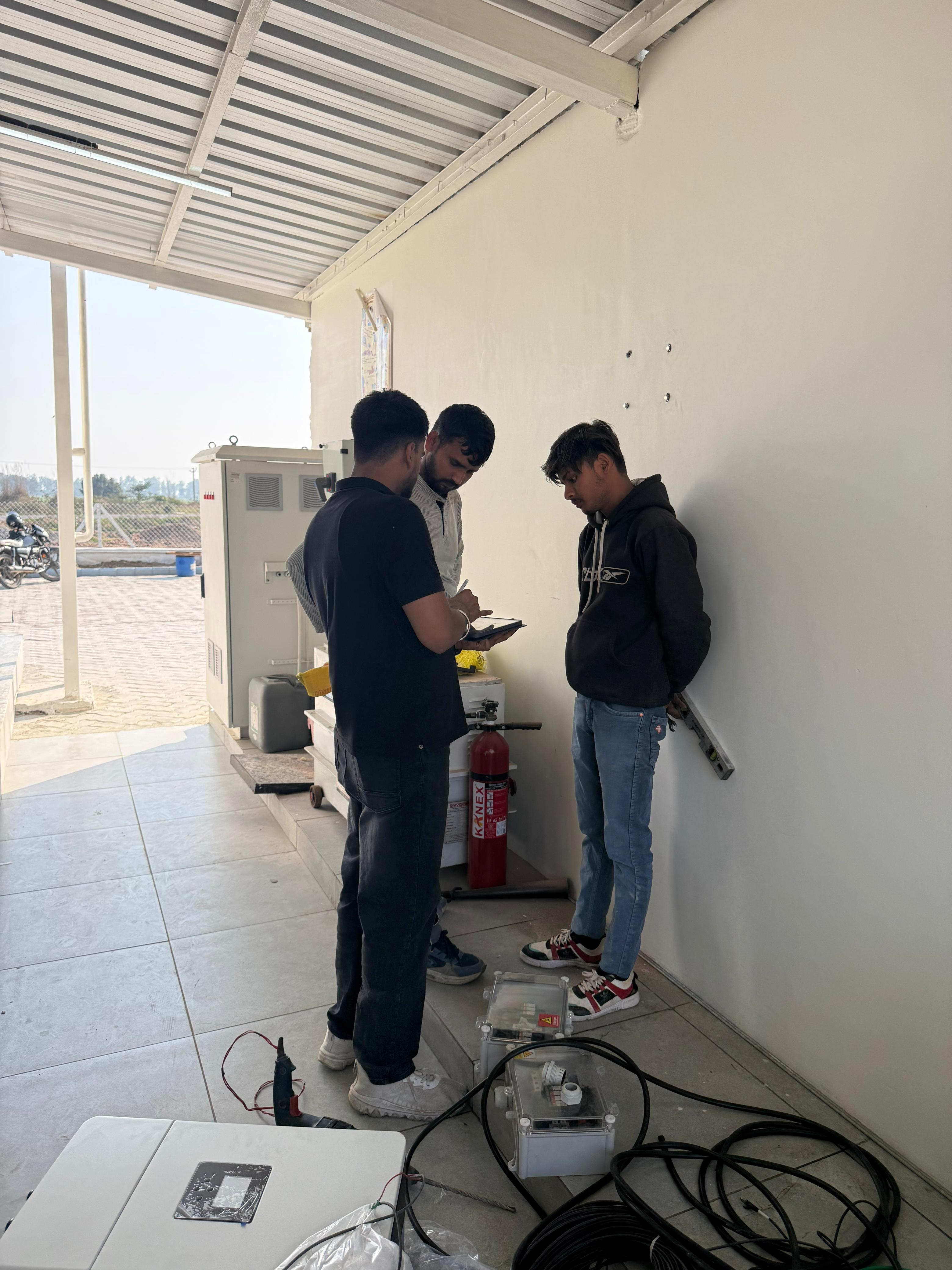
Hansi Jio BP Solar Installation

The Energy Challenge

The Hansi site presented three unique challenges that required architectural innovation.
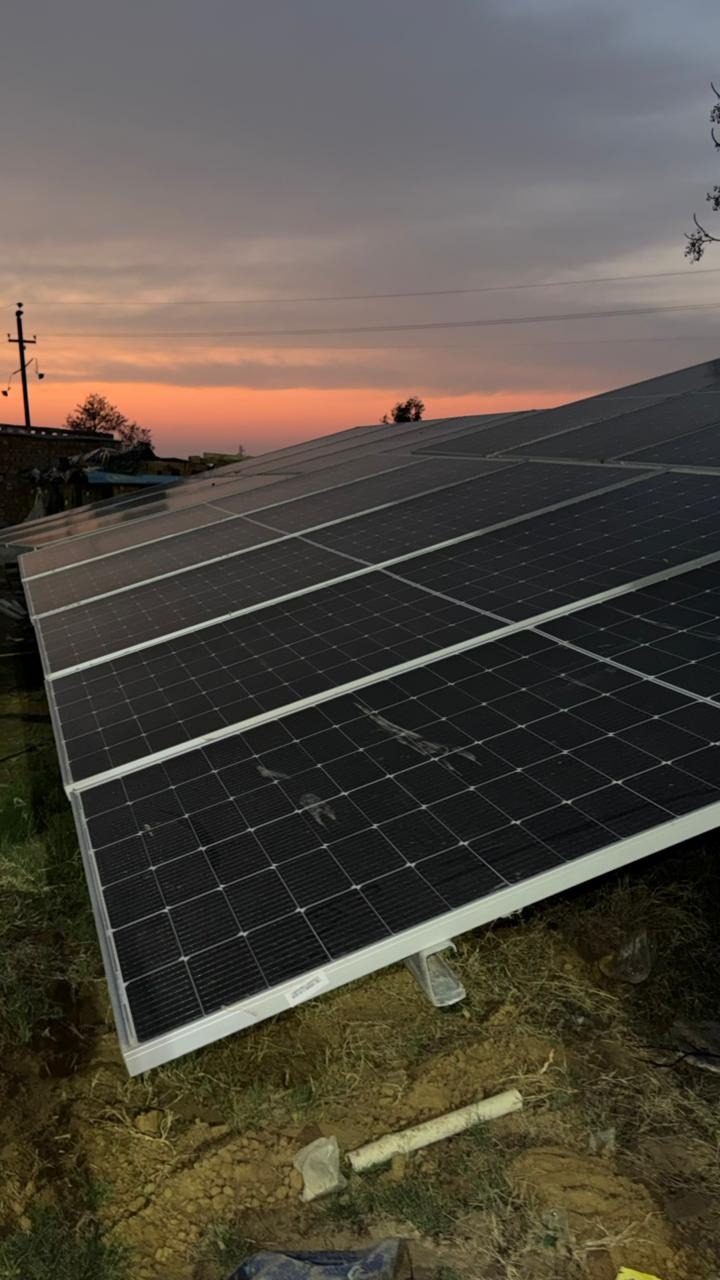
Hansi Site Infrastructure
  • Severe Grid Instability: Voltage fluctuated between 300–480V (nominal 415V) with frequent outages lasting 4–8 hours — damaging sensitive POS equipment.
  • Zero Tolerance for Downtime: Jio BP brand mandate of 99.9% uptime — fuel dispensers cannot reset mid-transaction, and server infrastructure requires seamless power.
  • Diesel Generator Issues: High operational costs (₹45,000/month), maintenance-intensive, and environmental compliance pressure.

Dual-Path Fail-Safe Architecture

Industry-first parallel redundancy design for retail fuel infrastructure.

The Innovation

Instead of the conventional single-path design (Grid → Inverter → Load), we implemented a dual-path architecture with parallel redundancy:
PATH A (Conventional Backup):
Grid/DG → Changeover-1 → Servo Stabilizer → Changeover-2 → Load

PATH B (Solar Primary):
Solar → Inverter (with built-in AVR) → Changeover-2 → Load
  • Path A provides stabilized grid power through the servo (handling 300–480V input)
  • Path B provides solar/battery power through the inverter (with its own AVR)
  • Changeover-2 at the output selects the best available power source
  • If either the servo OR the inverter fails, the other path maintains power automatically
System Architecture

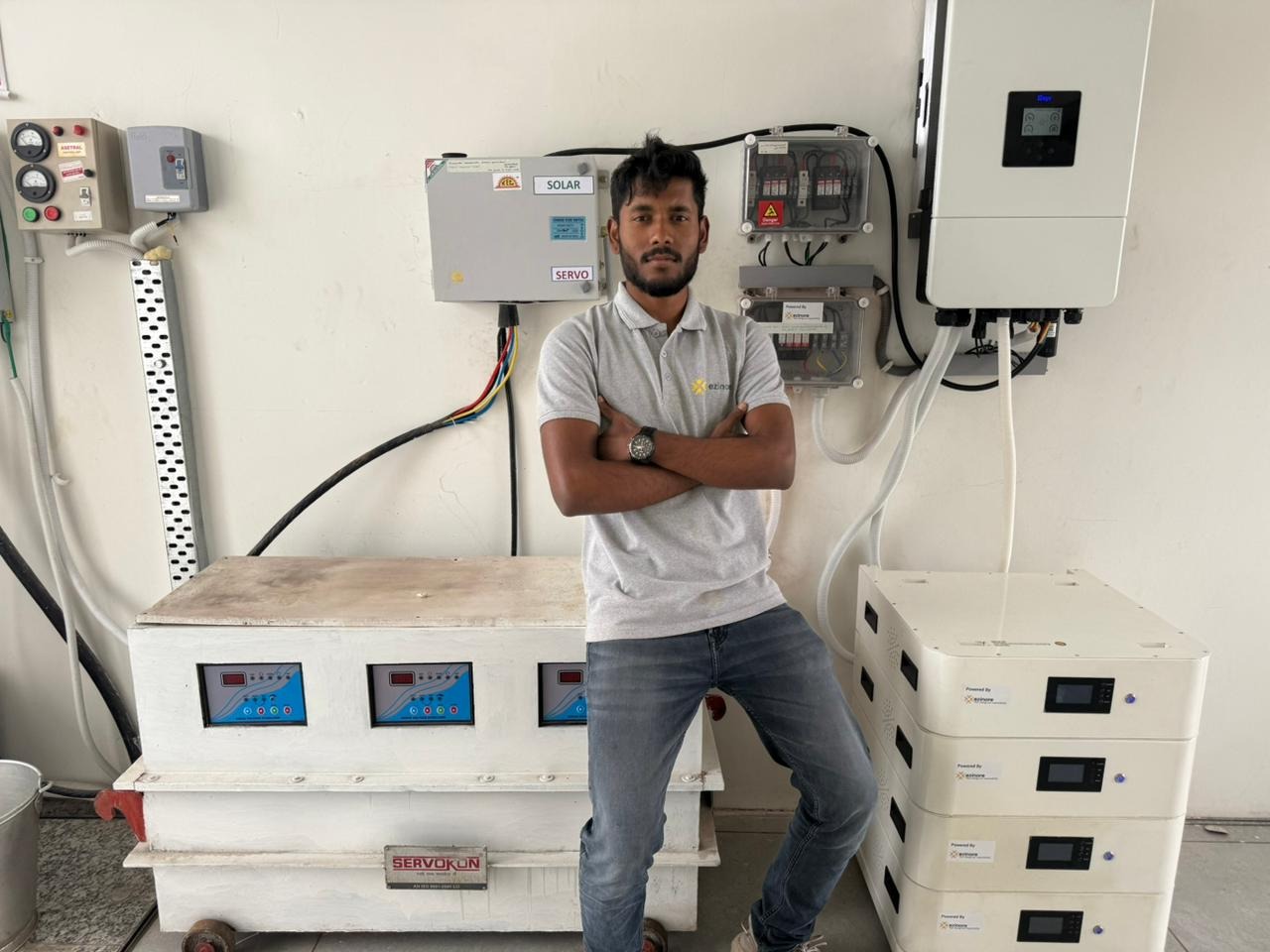
System Components

Purpose-built components working together for maximum reliability.

Solar PV Array

12kWp capacity with 23 panels (11+12 configuration) for primary daytime power generation.

Hybrid Inverter

12kW, 3-Phase with MPPT for power conversion, grid-tie, and battery management.

Battery Storage

20kWh Lithium-ion with CAN Bus BMS for nighttime backup and grid outage support.

Servo Stabilizer

30–40kVA with ±1% accuracy for grid voltage conditioning (300–480V input range).

Changeover-1

Grid/DG selector for source selection between grid and diesel generator.

Changeover-2

Output selector (Servo vs Inverter) for final power path redundancy.

24-Hour Intelligent Energy Flow

The system operates on intelligent priority logic that maximizes solar utilization while ensuring backup readiness.

Daytime (06:00–18:00)

Solar powers load directly (45%), charges battery (35%), exports surplus (15%). 95% solar utilization on-site.

Evening (18:00–22:00)

Battery discharges stored solar to power load. Handles peak evening demand spike at 19:00. No diesel required.

Night (22:00–06:00)

Minimal 5kW load. Battery provides 4+ hours autonomy. Grid fallback if battery <20% SOC. DG as last resort only.

Backup Duration by Load Scenario

  • Night Minimal (5kW): 4.0 hours — Post-midnight operations
  • Normal Operations (8kW): 2.5 hours — Standard business hours
  • Peak Hours (10kW): 2.0 hours — Morning/evening rush
  • Full Load (12kW): <2 hours — All dispensers active
Critical Insight: The 2.5-hour normal operation backup covers 90% of grid outages at the site, which typically last 1–3 hours.

Four Layers of Fault Tolerance

Comprehensive protection ensuring zero-downtime operations.

Layer 1: Component Redundancy

Dual voltage stabilizers (Servo + Inverter AVR), dual power paths — either path can power 100% of site load independently.

Layer 2: Automatic Fault Detection

Real-time monitoring of voltage, frequency, and waveform quality with <10ms fault detection and automatic transfer to healthy path.

Layer 3: Manual Override

Manual changeover switches for maintenance, bypass mode for emergency servicing — no single point of failure.

Layer 4: Battery Buffer

20kWh provides ride-through during transfer, prevents dispenser reset during switchover, and maintains server uptime during any transition.

Reliability Metrics Achieved

Dramatic improvements across all operational parameters.

99.9%

System Uptime

Up from 85% — a 14.9% improvement.

<3%

Power Quality (THD)

Down from >8% — 62% better harmonic performance.

±1%

Voltage Stability

Down from ±15% — 15x better regulation.

<10ms

Transfer Time

Down from 10–15 seconds — instantaneous switchover.

Economic Impact

75% reduction in total energy costs with ₹7.08 Lakhs annual savings.

Operational Cost Comparison

Cost Category Before (Monthly) After (Monthly) Savings
Diesel Cost ₹45,000 ₹5,000 89%
Grid Electricity ₹25,000 ₹12,000 52%
Maintenance ₹8,000 ₹5,000 37%
Carbon Credits ₹0 -₹3,000 Benefit
TOTAL ₹78,000 ₹19,000 75%
Economic Impact

Diesel Dependency Elimination

90% reduction in diesel usage, eliminating fuel price volatility risk.
Diesel Reduction

Before Implementation

  • DG runtime: 8–10 hours daily
  • Monthly diesel consumption: 1,200 liters
  • CO₂ emissions: 8.5 tonnes/month

After Implementation

  • DG runtime: <1 hour monthly (testing only)
  • Monthly diesel consumption: <100 liters
  • CO₂ emissions: 2.1 tonnes/month

Sustainability & ESG Impact

77.7 tonnes of CO₂ savings annually — equivalent to planting 3,500 trees.

75.7%

Carbon Reduction

From 102 to 24.3 tonnes CO₂/year

65%

Renewable Energy Share

Of total consumption from solar

33,000L

Diesel Saved Annually

Eliminating local DG emissions & noise

4–6 hrs

Energy Independence

Complete autonomy from grid

Why This Design is Industry-Leading

Setting a new standard for petrol pump energy infrastructure.

Conventional Solutions

  • Single-path design (no redundancy)
  • No voltage stabilization for grid
  • 1–2 hour battery backup only
  • Manual DG start during outages
  • 70–80% solar utilization

Ezinore’s Customized Solution

  • Dual-path redundancy (industry-first for retail fuel)
  • Dual stabilization (servo + inverter AVR)
  • 4–6 hour battery backup with intelligent management
  • Automatic seamless transfer (<10ms)
  • 95%+ solar utilization with zero export curtailment

Operational Benefits for Jio BP

Enhancing business continuity, customer experience, and regulatory compliance.

Server Protection

Jio BP’s centralized billing and inventory systems get 99.9% uptime. 20kWh battery provides uninterruptible power during any transition — no transaction data loss or system reboots.

Customer Experience

No fuel dispenser resets during power fluctuations. Consistent service during grid outages. Enhanced brand reputation for reliability.

Regulatory Compliance

Meets Petroleum Ministry mandatory backup power guidelines, environmental norms for DG emissions, fire safety (reduced diesel storage), and renewable purchase obligations.

Scalability & Replication

The Hansi model is fully scalable and serves as the reference architecture for future Jio BP projects.

Scalable Across Sizes

  • Smaller sites: 5kW solar + 10kWh battery
  • Larger hubs: 50kW solar + 100kWh battery
  • EV charging stations: High-power DC fast charging integration
  • Multi-site deployment: Centralized monitoring across Jio BP network

Applicable To

  • Hospital backup systems
  • Data center edge nodes
  • Telecom towers
  • Cold chain logistics
Get a Customized Solution

Monitoring & Maintenance

IoT-enabled remote monitoring with proactive maintenance scheduling.

Remote Monitoring System

  • Real-time energy flow visualization
  • Battery SOC and health tracking
  • Solar generation analytics
  • Fault alerts via SMS/email
  • Monthly performance reports

Maintenance Schedule

  • Solar Panels: Monthly cleaning & visual inspection
  • Inverter: Quarterly firmware updates & connection check
  • Battery: Monthly SOC calibration & thermal check
  • Servo: Bi-annual brush inspection & calibration
  • Changeovers: Annual contact inspection & lubrication
Expected System Life: 15–20 years (solar), 10 years (battery), 15 years (inverter)

Ready to Eliminate Diesel Dependency?

Get a fail-safe hybrid solar solution custom-designed for your 24×7 operations.

Deploy Smart Hybrid Solutions

Project Gallery

Visual highlights of the Hansi Jio BP hybrid solar installation.